Q&A with TIME Magazine’s Kid of the Year, Tejasvi Manoj, A Girls Who Code Alum on a Mission to Keep Seniors Safe in the Digital Age
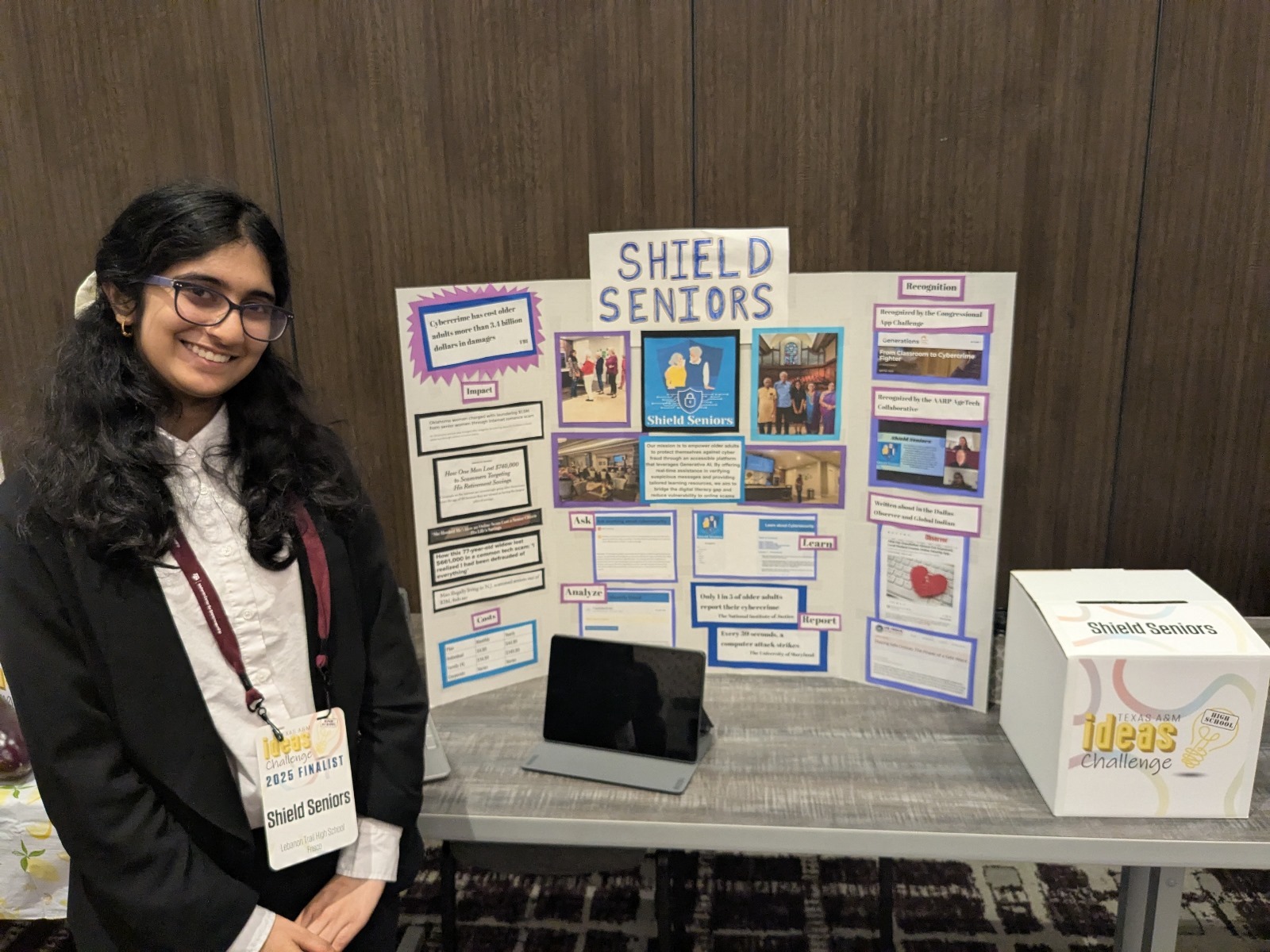
Our Girls Who Code students and alumni have inspiring stories. They aren’t just learning computer science skills through our programs; they also become part of a community that encourages them to use technology for social good. A few years ago, Tejasvi Manoj, a senior at Lebanon Trail High School in Frisco, Texas, enrolled in a Girls Who Code data science program. She applied her new skills to create a website that educates senior citizens about cybersecurity. This project recently earned her the title of TIME Magazine’s Kid of the Year. TIME annually honors a young leader (ages 8-16) who makes a positive impact on others through service, innovation, achievement, or entrepreneurship.
Our team had the opportunity to speak with Tejasvi about her cybersecurity initiative and her experience with Girls Who Code.
What Girls Who Code programs did you participate in?
I participated in the Data Science Track in the Fall 2023 Girls Who Code program.
Why did you decide to get involved with Girls Who Code? What first got you interested in coding, cybersecurity, etc.?
During my freshman year, I was exploring possible career paths when I discovered Girls Who Code (GWC). I immediately knew I wanted to be part of that community. Coding fascinated me because it allowed me to be creative while solving real-world problems. My interest in cybersecurity deepened after participating in the CyberPatriot competition, where I realized the critical importance of protecting people online and the power technology has to make a meaningful impact.
What do you think you took away from the GWC program you participated in?
The program taught me so much about data science, including how to analyze and visualize data using different libraries. I also learned how data science can be applied to real-world scenarios and how it intersects with social justice. Beyond technical skills, I gained incredible memories from the mentors and peers I met, and the conversations we shared left a lasting impact. GWC gave me both knowledge and a community.
How has Girls Who Code helped you (in your career or in your life outside of work)?
Girls Who Code has made an incredible difference for me, as it has impacted my development as a person and as a future professional. It gave me a supportive network of like-minded girls who share my interest in tech, which increased my self-confidence in pursuing STEM fields. The skills I developed through Girls Who Code are far more than just programming; I gained problem-solving abilities, teamwork experience, and perseverance – all skills that I can now apply to my high school projects and competitions (like CyberPatriot), as well as to other initiatives I am working on, such as Shield Seniors, which utilize technology to protect seniors from being scammed online. In addition to coding, Girls Who Code showed me how to positively influence my community with the power of technology.
Did you face any obstacles or doubts in the early stages of building Shield Seniors (technical, time, resources), and how did you overcome them?
Yes, I faced several challenges, including limited mentorship, AI and cybersecurity knowledge, and funding. With few resources and no clear guidance, I focused on making the most of what I had. I reached out to hundreds of mentors, professors and experts—while most didn’t respond, the guidance of even one mentor made a huge difference. I also taught myself AI and cybersecurity through YouTube and Udemy, proving that persistence, curiosity, and a willingness to reach out can overcome many obstacles.
What is your long-term vision for Shield Seniors (e.g., integrating with devices, partnerships, full commercial deployment)?
Our mission is to put Shield Seniors in the hands of millions of older adults, empowering them to navigate the digital world safely and independently. I want to protect seniors from cyberfraud, cybercrime, and other online threats while giving them confidence to use technology as a tool, not a risk.
Looking ahead, I envision leveraging AI to provide personalized guidance, real-time threat detection, and interactive support tailored to seniors’ needs. I also hope to partner with retirement homes, community centers, and senior organizations nationwide to extend Shield Seniors’ reach. Ultimately, my goal is to create a comprehensive ecosystem where technology actively protects older adults, educates them about cybersecurity, and fosters independence—making online safety effortless, intuitive, and widely accessible.
Why would you encourage young people to become cyber-safe citizens, and what advice do you have for young people (especially girls) who want to get into cybersecurity or build socially impactful tech?
Technology is powerful but comes with risks, so it’s important to stay educated and practice online safety. For young people building tech, remember your “why”—for me, it was helping my grandparents through Shield Seniors. For girls in tech, never settle. Trust yourself, take action, and be persistent—your ideas can truly change the world.
To learn more about Tejasvi’s initiative, visit the Shield Senior website. Check out our programs page to find out how you can join a Girls Who Code program.


